Global Coalition On
Landscape Report on Vaccine Policy in Japan
2026
→
Taking On Longevity with Market Innovation

We develop initiatives that focus on meeting the challenges of worldwide aging with groundbreaking market solutions and progressive public policies.
Through our white papers, roundtables, webinars, presentations to third parties, and other communications materials, we are leading the global aging dialogue and providing public education designed to enable healthier and more active aging.
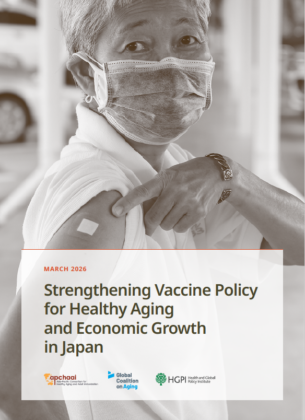
In a new landscape report launched in March 2026, GCOA, the Asia-Pacific Consortium on Healthy Aging and Adult Immunization (AP-CHAAI), and Japan's Health and Global Policy Institute (HGPI) analyze more than 100 policy documents and studies, finding that Japan is not fully realizing the benefits of adult vaccines due to structural barriers in financing and policy design that limit vaccine uptake among older adults.
Read Now
At OECD headquarters in Paris, the Organisation for Economic Co-operation and Development (OECD) and the Global Coalition on Aging (GCOA) jointly convened a full-day workshop bringing together senior leaders from government, business, labor, academia, and civil society to address a defining economic challenge: how aging societies can sustain growth by building healthier, more productive workforces. As demographic change reshapes labor markets across OECD countries — with increasingly more old than young — healthy longevity has become central to competitiveness, fiscal sustainability, and long-term prosperity.
Read Now
GCOA’s flagship event, Silver Economy Forum (SEF) 2025 in Manchester, UK, convened mayors, ministers, business leaders, investors, and community organizations to answer the questions: Why do we need age-friendly cities? What does it take to build cities that work for all ages? How do we scale proven models?
Read Now
Launched in November 2025, the Alzheimer’s Policy & Impact Playbook provides a strategic framework and practical guidance for advancing awareness, funding, and access in Alzheimer’s advocacy and policy.
Read Now2026
→
In a new landscape report launched in March 2026, GCOA, the Asia-Pacific Consortium on Healthy Aging and Adult Immunization (AP-CHAAI), and Japan’s Health and Global Policy Institute (HGPI) analyze more than 100 policy documents and studies, finding that Japan is not fully realizing the benefits of adult vaccines due to structural barriers in financing and policy design that limit vaccine uptake among older adults.
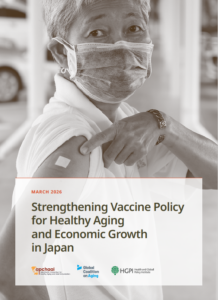 As Japan becomes one of the world’s most rapidly aging societies, adult vaccination is emerging as a critical yet underutilized tool for protecting health, sustaining productivity, and strengthening economic resilience. The report highlights how adult vaccines can reduce hospitalizations, improve productivity among older workers, and strengthen the sustainability of Japan’s healthcare system in a rapidly aging society.
The report calls on policymakers to:
Clarify pathways for including vaccines in the national immunization schedule
Align national and local financing to ensure equitable access
Strengthen preventive health strategies to support healthy aging and Japan’s growing silver economy
The report was launched ahead of a high-level symposium in Tokyo, “Redesigning Adult Vaccine Policies for Super-Aging Societies: What Role Should Vaccines Play to Encourage Healthy Aging and Support Economic Growth in Japan, Asia-Pacific and Beyond?,” bringing together Japanese, regional, and global experts on vaccines, health policy, economics, and aging. The symposium, as with the landscape report, was convened by GCOA, AP-CHAAI, and HGPI.
2026
→
At OECD headquarters in Paris, the Organisation for Economic Co-operation and Development (OECD) and the Global Coalition on Aging (GCOA) jointly convened a full-day workshop bringing together senior leaders from government, business, labor, academia, and civil society to address a defining economic challenge: how aging societies can sustain growth by building healthier, more productive workforces. As demographic change reshapes labor markets across OECD countries — with increasingly more old than young — healthy longevity has become central to competitiveness, fiscal sustainability, and long-term prosperity.
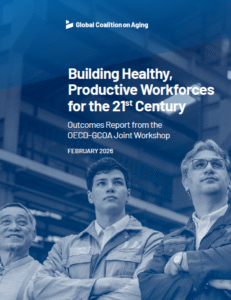 In February 2026, GCOA released an outcomes report from the OECD-GCOA workshop. The report highlights the importance of integrating prevention and workforce wellbeing into core economic and labor policy, with health and wealth viewed as two sides of the same coin. Key calls to action include embedding healthy workforce aging into national economic strategies; scaling prevention and early detection, including life-course immunization; expanding flexible, age-friendly workplace models, including a focus on caregiving and return-to-work policies; strengthening data and cross-sector measurement; and sustaining collaboration across government, business, labor, and civil society to translate evidence into policy.
The report also showcases practical case examples from Japan’s KENKO Investment for Health initiative, GSK’s global Partnership for Prevention, L’Oréal’s multigenerational workforce strategy, Norway’s graded return-to-work model, and Portugal’s LABPATS healthy workplace framework demonstrating that aligning health and economic growth is not theoretical, but already underway.
2026
→
 Super-aging Japan faces a dual challenge: rising non-communicable disease (NCD) burden and persistent vulnerability to vaccine-preventable respiratory infections. With nearly 75% of deaths linked to NCDs and growing evidence that infections like influenza and pneumonia accelerate chronic disease progression, adult immunization must be viewed not only as infectious disease prevention, but as a core healthy longevity and economic strategy.
To address these challenges, the Global Coalition on Aging convened Japanese and international experts to examine the clinical, economic, and policy implications. The resulting report, released in February 2026, outlines a focused reform agenda to strengthen adult vaccination policy and align it with Japan’s broader healthy aging priorities.
Key Calls to Action
Position adult vaccination as an NCD prevention strategy within national healthy aging frameworks.
Establish a unified national adult immunization framework with sustainable funding.
Integrate vaccination into routine adult care and incentivize provider engagement.
Expand access, monitoring, and public awareness to drive higher uptake.
2026
→
 On the sidelines of the OECD–GCOA Workshop on Healthy Aging and the Workplace, the Global Coalition on Aging convened a private expert roundtable examining the impact of migraine on workforce participation, productivity, and economic growth in aging societies. Drawing on new economic evidence and cross-sector perspectives from policymakers, employers, economists, and patient advocates, the discussion reframed migraine not only as a health issue, but as a macroeconomic and workforce challenge with implications for gender equity, care systems, and long-term growth as population aging lends further urgency. This takeaways report captures the key insights from that dialogue and outlines priority actions to translate evidence into policy and practice.
Calls to Action
Elevate migraine within economic, workforce, and healthy aging policy agendas
Treat health investment as a strategy for productivity and labor force resilience
Promote migraine-supportive workplace policies and practices
Strengthen cross-sector evidence, data, and advocacy coalitions
Reframe the public narrative to align migraine with decision-maker priorities
2026
→
GCOA’s flagship event, Silver Economy Forum (SEF) 2025 in Manchester, UK, convened mayors, ministers, business leaders, investors, and community organizations to answer the questions: Why do we need age-friendly cities?
What does it take to build cities that work for all ages?
How do we scale proven models?
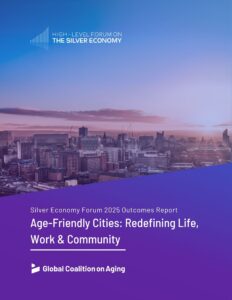
This report translates SEF 2025 discussions and commitments into a practical roadmap organized around:
For more information and to see video from the sessions, please visit the Silver Economy Forum website.
2026
→
 Released in January 2026, these Calls to Action capture insights and outcomes from a GCOA-convened expert working group session in 2025 to advance implementation of integrated adult immunization and chronic disease strategies in the European Union. Building on insights from GCOA’s April 2025 report and consensus statement Vaccine-Preventable Respiratory Disease, Life Course Immunization, and Chronic Disease Management: The Healthy Aging Difference — which explored the evidence linking vaccine-preventable respiratory infections with noncommunicable diseases — this session focused on tangible policy and system actions for the EU and Member States to strengthen uptake and embed immunization into prevention and care frameworks.
Key Calls to Action
Generate localized data quantifying the health and economic impact of adult immunization for people with chronic conditions.
Reframe adult immunization as a long-term investment in healthy aging, productivity, and system sustainability.
Highlight productivity benefits across the life course to broaden policy relevance beyond traditional health outcomes.
Integrate immunization into chronic disease strategies and guidelines at EU and national levels.
Improve access through policy and delivery innovation, including expanded vaccinators and streamlined pathways.
Build trust through coordinated communication, leveraging healthcare providers and scientific voices.
Adopt a life-course approach to immunization, addressing gaps across ages and care transitions.
2025
→
 The Global Coalition on Aging, in collaboration with 55/Redefined, has developed Age Intelligence in Action: Global Best Practices from Leading Employers, as a comprehensive guide to building age-inclusive, future-ready workforces. As demographic shifts accelerate and workers over 50 become an indispensable driver of organizational performance, this report distills the most effective strategies used by leading employers worldwide to attract, grow, and engage midlife and later-career talent. Drawing on global data, employer case studies, and practical frameworks, the report offers a clear roadmap for companies seeking to strengthen multigenerational teams, boost productivity, and unlock the full economic potential of the Silver Economy.
2025
→
As America ages, Medicare must evolve to meet the needs of a growing population living longer with complex health conditions. Aortic stenosis — a serious, age-related heart disease — can be fatal if left untreated, yet current Medicare policy limits access to the life-saving, minimally invasive procedure known as TAVR (Transcatheter Aortic Valve Replacement) until symptoms appear.
GCOA’s messaging document, “Modernizing Medicare Coverage: It’s Time to Expand Access to TAVR for Asymptomatic Aortic Stenosis,” outlines why, based on a substantial and growing body of evidence, expanding TAVR access for asymptomatic patients is both clinically sound and economically strategic. The accompanying infographic distills the key data showing earlier intervention saves lives and lowers costs, while the messaging deck offers a visual overview to support education and advocacy efforts.
Together, these materials call for a simple but powerful change: updating Medicare coverage to reflect the current body of evidence and ensure older adults receive the right treatment at the right time.
2025
→
Launched in November 2025, the Alzheimer’s Policy & Impact Playbook provides a strategic framework and practical guidance for advancing awareness, funding, and access in Alzheimer’s advocacy and policy.
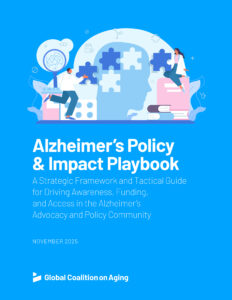
Grounded in insights from a series of GCOA-led expert roundtables, developed in partnership with Lilly, the Playbook captures lessons learned from experts and leaders across major disease areas — including cancer, HIV/AIDS, cardiovascular disease, and diabetes — to identify proven strategies that can accelerate progress in Alzheimer’s.
By bridging insights from other successful health movements, the Playbook outlines actionable steps for policymakers, advocates, and healthcare leaders to strengthen systems, drive investment, and ensure equitable access to innovation for Alzheimer’s disease.
2025
→
 Women are drivers of the Silver Economy. They live longer, carry disproportionate caregiving responsibilities, and often face systemic barriers linked to age and gender. Yet they also bring the vision, resilience, and leadership required to redefine aging and unlock opportunities that can strengthen economies and societies for all. This new report from GCOA’s WISE Council showcases women across industries driving change in the Silver Economy, highlighting the lived experiences, insights, and solutions of women at the forefront of industries ranging from healthcare and finance to technology and construction.
From these accounts, the WISE Council identifies four key priorities for companies and policymakers:
2025
→
The 340B Drug Pricing Program was created to help underserved patients access affordable medications. But today, its impact is being diminished by limited transparency and growing complexity across the system.
GCOA’s policy brief, “340B Reform: Recommendations to Support Healthy Aging & Health Innovation,” explores how gaps in oversight and program design may be driving misaligned incentives — contributing to drug price markups, reduced charity care, and rising costs for employers, families, and the broader healthcare system. For older adults, who often rely on prescription medications to manage chronic conditions like cancer, HIV, and heart disease, these challenges can make it harder to access timely and affordable care.
The brief calls for targeted federal reforms to improve transparency, tighten eligibility, and strengthen oversight — ensuring the program better supports equitable access and healthy aging in line with its original mission.
2025
→
 On June 13th, following the premiere of the PBS documentary Caregiving at the United Nations in New York, the Global Coalition on Aging, the United Nations Department of Economic and Social Affairs, and WETA hosted a roundtable to advance action on caregiving. This cross-sectoral roundtable built on the stories shared by caregivers in the documentary to encourage meaningful and collaborative action to address the caregiving crisis on a global scale. Participants discussed critical next steps following the awareness-raising documentary, resulting in a blueprint for action on caregiving.
2025
→
The Inflation Reduction Act (IRA) introduced a critical distinction between small and large molecule drugs that threatens innovation and access to life-saving treatments, especially for older adults, cancer patients, rural communities, and those with chronic or rare diseases. This GCOA policy brief explores how the IRA’s “pill penalty” disincentivizes the development of small molecule therapies, which are often more affordable, accessible, and are essential to healthy aging. Further, the report outlines the IRA’s disproportionate impact on these vulnerable populations and the broader implications for U.S. innovation, and how congressional action through the EPIC Act may help to correct this policy imbalance.
2025
→
 On October 14, 2024, alongside the World Health Summit in Berlin, Germany and Silver Economy Forum 2024, the Global Coalition on Aging (GCOA) convened a cross-disciplinary group of experts and leaders in Immunization Information Systems (IIS) across development, implementation, and advocacy from a diverse geographical scope, together with experts in healthy aging and policy. Experts discussed the best practices and successful IIS, challenges, and barriers, as well as the advocacy needs for IIS as a critical public health tool to advance life course immunization, health equity, and more resilient health systems in the face of global demographic change.
This new GCOA report distills four key takeaways and four calls to action from the roundtable discussion:
The report highlights persistent data gaps, especially in adult immunization, and the need for countries to strengthen, expand, and connect their IIS to support healthy aging and resilient health systems. It calls for bold, coordinated action to prioritize IIS development, communicate IIS value, and ensure that no one is left behind in the global effort to prevent disease and promote healthy longevity.
2025
→
This Call to Action from GCOA’s Aging with Heart Alliance urges UN Member States to address the global impact of cardiovascular disease (CVD)–the leading cause of death worldwide—within the context of rapid population aging. With CVD prevalence and associated costs rising sharply with age, the document outlines a four-part agenda: expand prevention across the full continuum of care; strengthen access to early detection and community-based treatment; invest in innovation and health system transformation; and empower patients through integrated care models. Released ahead of the 2025 UN High-Level Meeting on NCDs and Mental Health, the report emphasizes that prioritizing CVD is essential to achieving healthy aging, health equity, and long-term global health and economic resilience.
2025
→
In preparation for the 2025 UN High-level Meeting on NCDs and Mental Health (HLM4), the Global Coalition on Aging calls for a bold shift: global health priorities must include older adults, who bear a growing burden of noncommunicable diseases (NCDs) yet are often overlooked. GCOA’s Call to Action outlines critical strategies across prevention, innovation, and care systems to ensure healthy aging is central to the fight against NCDs, while also tackling ageism and structural gaps in healthcare. The Call to Action makes the case that achieving health and well-being for all—as promised in the Sustainable Development Goals—depends on recognizing and investing in older populations.
2025
→
The Global Coalition on Aging developed a comprehensive central narrative and set of talking points, Adult Immunization and the Pillars of Prevention: Reimagining Public Policy for Healthy Aging and Sustainable Economic Growth in an Aging World. The narrative and talking points are intended as a resource to empower anyone working to ensure global aging is a path for healthy longevity, fiscally sustainable economic growth, and social value creation to communicate effectively and persuasively about the importance of adult immunization for 21st century aging of societies.
The central narrative lays out three pillars that are essential to the new prevention paradigm for the 21st century, centered around adult immunization:
2025
→
On December 10, 2024, the Global Coalition on Aging brought together global experts across noncommunicable diseases (NCDs), life course immunization, healthy aging policy, economic and fiscal policy, and patient advocacy for a private roundtable. The discussion examined the growing evidence linking NCDs and vaccine-preventable respiratory diseases (VPRDs), like influenza, RSV, Covid, and pneumonia.
Experts at the roundtable discussed the urgent need for health systems and governments to utilize routine immunization to improve NCD prevention and management, as their prevalence rises amid the aging of society.
This April 2025 report, Vaccine-Preventable Respiratory Disease, Life Course Immunization, And Chronic Disease Management: The Healthy Aging Difference, summarizes key themes and actionable recommendations from the discussion, including the need to expand our understanding of what immunization is for.
Insights from the roundtable have also been integrated into GCOA’s Consensus Statement on Vaccine-Preventable Disease, Life Course Immunization, and Chronic Disease Management, calling for bold action from governments and cross-sectoral leaders to integrate life-course immunization into the management and prevention of NCDs. The consensus statement identifies concrete steps for individuals, healthcare systems, and governments to reduce the burden, impact, and economic costs of NCDs through life course immunization.