 Watch here
 Global Coalition On

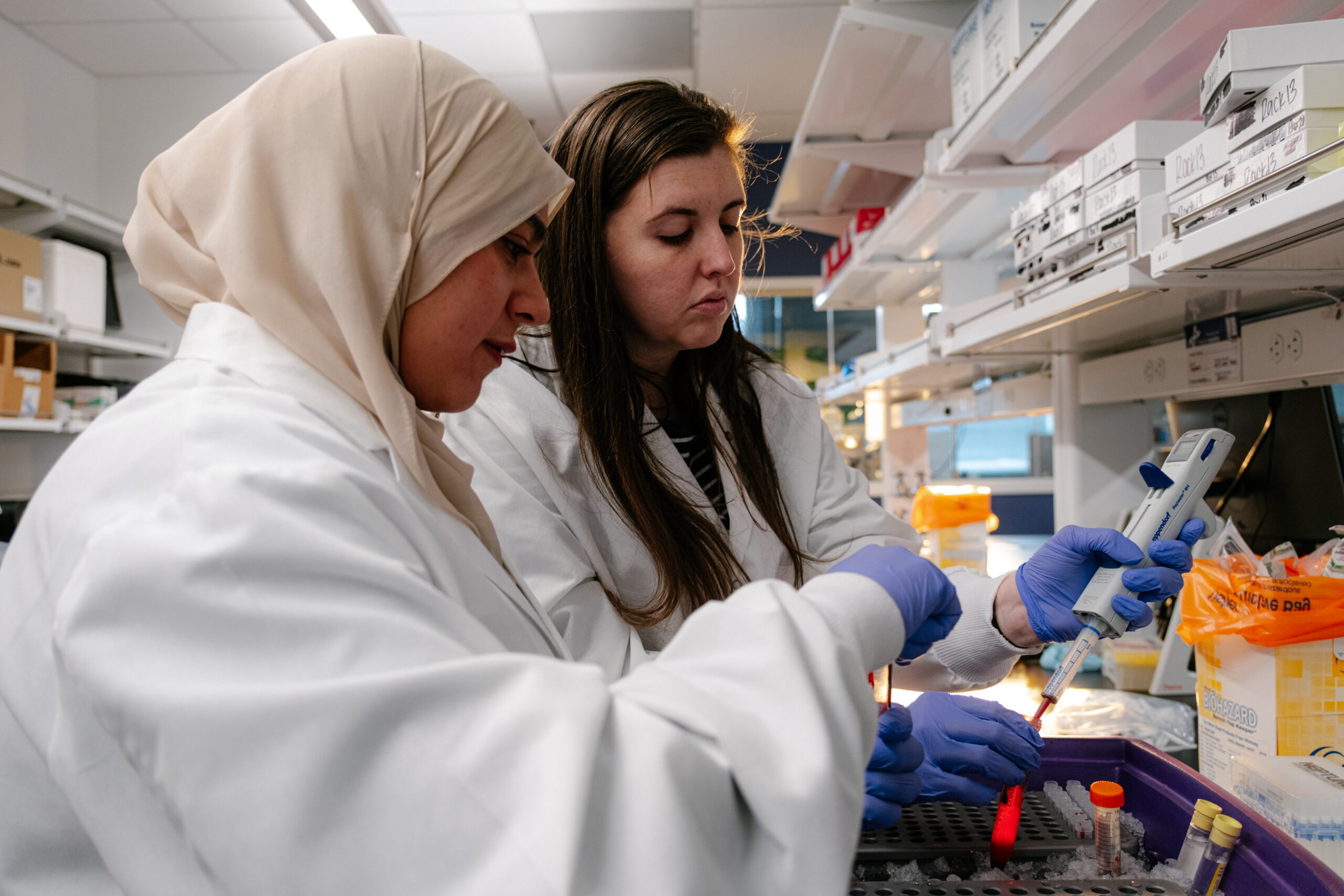
Transforming Alzheimer’s Detection
Inside the push to make Alzheimer’s detectable
A simple blood draw is beginning to reshape how Alzheimer’s disease can be detected.
Behind it lies years of painstaking science and a vision of a future where diagnosis no longer depends on who you know or where you live.
Alzheimer’s is the most common form of dementia, accounting for 60-70% of cases, and is growing at a scale that is still fully reckoned with.
In 2019, an estimated 57 million people worldwide were living with dementia, a figure projected to nearly triple by 2050, driven largely by ageing populations. In the US alone,
7.2 million people over 65 are living with Alzheimer’s disease today, a number expected to rise to 13.8 million by 2060. Behind those statistics are patients who, at some point, required insight into the changes occurring in their minds, yet frequently encountered challenges accessing that information.
Historically, confirming an Alzheimer’s diagnosis required either a specialist procedure or a post-mortem. Amyloid plaques, the hallmark of the disease, could only be assessed in brain tissue examined after death. PET scans, a type of non-invasive image test, made that process possible but came with accessibility and infrastructure constraints. Cerebrospinal fluid testing (CSF), inserting a needle into the base of the spine to draw fluid, offered another route but fewer than half of UK patients say they would be willing to undergo the proceedure, citing fear of pain and risk of paralysis. Neither was the kind of test a clinician could conduct alongside a cholesterol check at a check-up.
That is now beginning to change. Blood-based testing for Alzheimer’s biomarkers has moved from research into early clinical use, and with it, the possibility of diagnostic clarity arriving sooner and reaching further.
Mikaela Nichkova-Doseva, a development scientist at Beckman Coulter Diagnostics, has spent more than a decade developing immunodiagnostic tests. In 2023, the company launched a strategic initiative to enter the neurodegenerative disease space, and Nichkova-Doseva was asked to lead reagent research and development for what would become their first neurology test. “It was a totally new field for us,” she says, explaining that the biological signals the team needed to detect were faint. “Very exciting, but very challenging.”
There are two major pathological processes, she explains. “One is the build-up of amyloid beta plaques (a protein deposit that accumulates in tissues) and the result from these plaques is the formation of tau tangles. As amyloid accumulates, it triggers a series of changes in this tau protein, and what happens is a specific chemical modification at position 217.”
That modification produces what researchers call phosphorylated tau 217 (p-tau217), and it has emerged as one of the most specific blood-based indicators of Alzheimer’s pathology currently known. Studies have shown strong correlations between elevated plasma levels and both PET imaging findings and CSF markers.
A problem they are facing is detection. P-tau217 circulates in blood at concentrations far lower than in CSF, where most established tests had been developed. “The challenge was that we had to achieve a very high level of clinical sensitivity and specificity for Alzheimer’s detection,” Nichkova-Doseva says. “And the levels we needed to detect in plasma are at extremely low concentrations.”
The approach Beckman Coulter took relies on an immunoassay, a test built around antibodies engineered to bind to a specific target molecule, something that Nichkova- Doseva calls “the lock-and-key principle”.
“Practically, I explain it like this: you’re going to the lake, you’re fishing for a specific fish, and you need to have the specific hook [to catch it].” The result is a test capable of detecting p-tau217 from a standard blood draw, designed to make testing more accessible in clinical laboratories around the world.
The clinical shift became concrete in May 2025, when the FDA granted clearance to the first blood-based Alzheimer’s test, developed by Fujirebio. In validation trials, the blood test results correlated with amyloid PET results more than 90% of the time, figures placing blood-based testing in a position where it could meaningfully inform clinical decisions.
The test does not deliver a definitive diagnosis. Results fall into positive, negative and an intermediate zone where further investigation is needed. Its primary value is earlier screening to determine who needs the more invasive and expensive procedures that follow.
“The blood test will not replace fully yet the existing PET scans or CSF,” Nichkova-Doseva says, “but it can be used to triage. Practically, you have the patient, you observe their clinical status based on symptoms, and the clinician will do the blood test. Based on the established cut-off, they can say: high level – yes, we need a PET scan; or no, no need.”
But for elderly patients who may already find diagnostic procedures overwhelming, this new tool could offer relief, Nichkova-Doseva explains. A PET scan requires lying still inside imaging equipment for an extended period. A lumbar puncture is an invasive spinal procedure. A blood draw is something most people have had.
The clinical framework guiding how these tests should be used has also been formalised. In 2025, the Alzheimer’s Association published its first clinical practice guidelines on
blood-based biomarker testing in specialist care settings, offering evidence-based recommendations for clinicians on who should be tested and when. The guidelines are designed to ensure that blood testing sits within a broader diagnostic pathway, integrated with clinical assessment and, where indicated, confirmatory imaging or CSF.
An earlier diagnosis would mean little without something to do with the information. Current treatments cannot restore lost neurons or reverse years of accumulated damage. What they could offer is time.
“The treatments can meaningfully slow the pace of the decline. Practically, this brings a real impact on the quality of life of the patients,” Nichkova-Doseva says.
“Many years ago, cancer was in this situation. Now, a lot of cancers are manageable and allow patients to [live] longer and better. This is the beginning for neurodegenerative diseases.”
Eventually, Nichkova-Doseva hopes the test will sit on a standard blood panel made routine for the elderly. “This is the dream,” she says. “It’s just a question of time to demonstrate the utility and get into clinical practice.”
But a good test is only the beginning. Whether it reaches the patients who need it depends on what surrounds it. “The accessibility for the patient is huge,” Nichkova- Doseva says. Not every centre offers PET scanning, and clinical utilisation varies. reimbursement [varies]. “These are very important drivers for adoption.”
Danaher, through Beckman Coulter Diagnostics, is working on tests designed for consistent performance across different laboratory settings, working closely with clinical researchers, including teams at Washington University in St Louis.
For clinicians evaluating patients whose thinking or memory may be shifting, earlier access to biomarker testing could mean reaching answers sooner. It could also reshape how triage decisions are made. For researchers working on the next generation of treatments, it could mean access to patients identified earlier, when intervention may still have more to offer. What now remains is integration. “We’re the developers,” Nichkova-Doseva says. “We will give the tool. But after that, how the tool gets implemented depends on the guidelines and [clinical utilisation].”
The Alzheimer’s Association, in its statement following the FDA clearance, noted that nearly four in five Americans say they would want to know if they had Alzheimer’s before it affected their lives. That desire has long outpaced the tools available to act on it. They believe the gap is not yet closed but the direction of travel is clearer than it has been.
“I believe that better treatments will be discovered,” Nichkova-Doseva says. “Maybe one day, we’ll have even more efficient treatment.”