 Watch here
 Global Coalition On

Science of Healthier Lives
Professor Andrea Maier has a plan to improve people’s health. Her mission is to better understand ageing through rigorous science, and to push for higher standards in ageing research and its implementation into clinical practice.
Professor Andrea Maier’s distinguished career has established her as a globally recognised leader in healthy longevity medicine. As founder and director of The National University of Singapore (NUS) Academy for Healthy Longevity at the Yong Loo Lin School of Medicine, she has built the NUS Academy into a leading academic and clinical research authority in a rapidly expanding field that can be associated with noise and hype. Guided by rigorous science, the NUS Academy is conducting research in humans, generating clinical evidence as to how interventions can be used to optimise health and advancing the evidence-led model for healthy longevity.
The NUS Academy was founded with the goal to make healthier lives attainable for individuals at any age, for as long as possible, and the origin of the idea started long before the NUS Academy had a name. It stemmed from a moment that made a lasting impression on Maier, about what ageing can look like.
Tucked away in a quiet corner of Tangshan, China, Maier had a chance encounter with a remarkable 90-year-old Tai Chi educator, who she says was incredibly youthful in both mind and body. For several weeks, Maier spent each morning getting acquainted with the vitality of the educator, growing more curious as to how human biology had enabled the educator to sustain such remarkable youthfulness. Their time spent together sparked a revelation that the human body can renew itself and remain young. She became determined to understand how people of all ages can preserve and improve their health.
“That was the moment I realised I wanted to become an internal medicine specialist and geriatrician,” she says. “I wanted to move towards healthy longevity medicine and build the next frontier of medicine to optimise healthspan.” That ambition is not abstract. At the NUS Academy, her work is leading the global movement in healthy longevity medicine, also known as precision geromedicine in academic and professional setting, in which personalised treatments can be matched to peoples specific health needs based on ageing biomarkers. Maier and her team created a platform that brings together clinician-scientists, researchers and educators, who are pushing the boundaries of the
science and evidence of extending healthspan – the years lived in good health – and is translating the clinical evidence into the community.
In the buzzing clinical trial centre, researchers at the NUS Academy are developing gerotherapeutics – personalised interventions guided by biomarker tests (gerodiagnostics) that measure individual’s ageing patterns, enabling targeted strategies to optimise health, extend healthspan, and aiming to prevent age-related diseases throughout adulthood. “Most of our trials are based on studies which show lifespan and healthspan extension in, for example, mice,” says Maier. “And then once we have good arguments that the molecules are safe and they might be effective, we transition to trialling them in humans.”
The NUS Academy places strong emphasis on transparency. By openly sharing the details of each clinical trial, they aim to foster a sense of comfort and clarity, strengthening trust and increasing individuals’ motivation to participate in ongoing studies. “Seeing clinical trial participants improve their strength, cognition and their overall well-being over time is incredibly rewarding,” says Natasha To-Anan, clinical research assistant at NUS Academy.
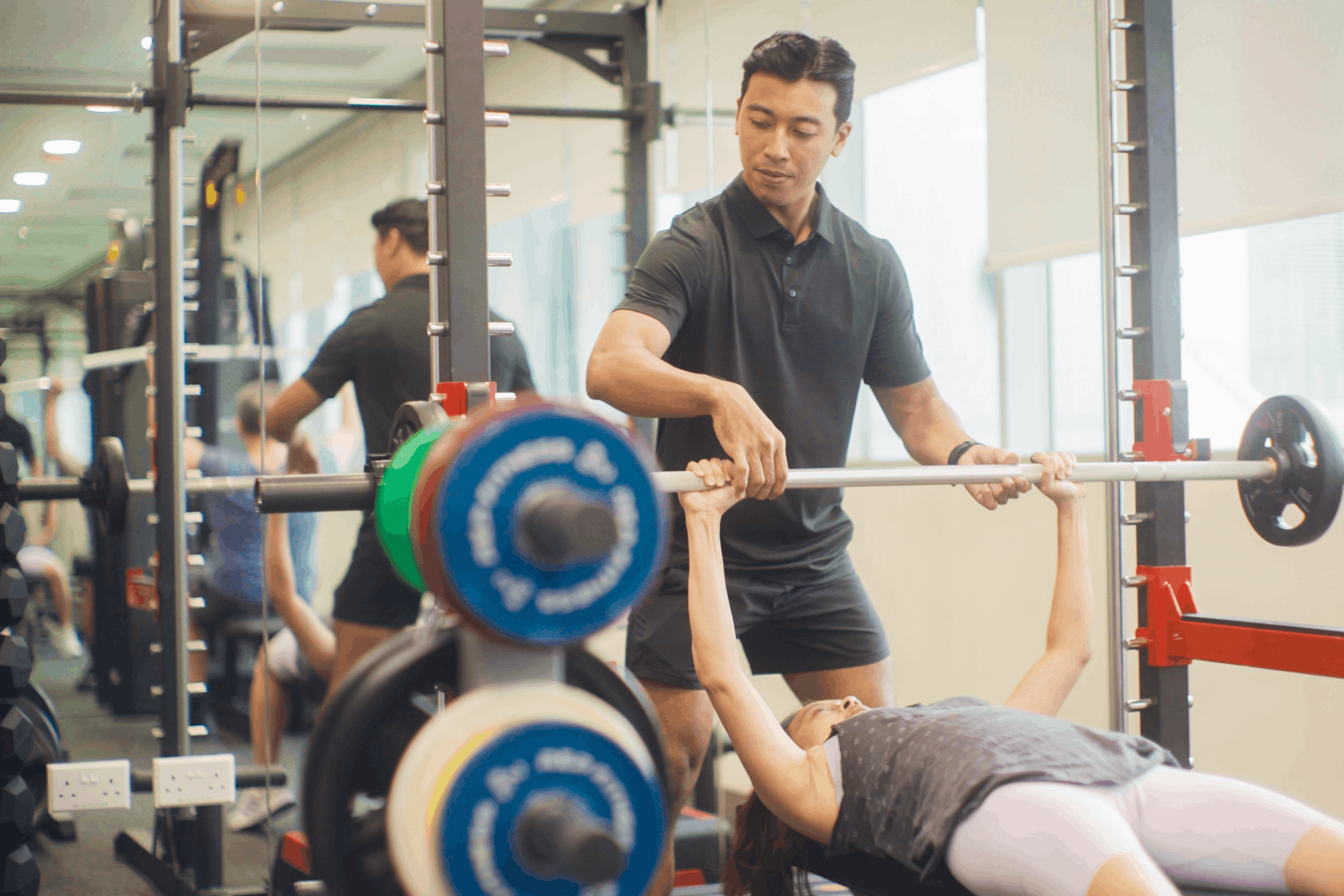
One of the ongoing clinical trials at the NUS Academy, Prometheus, has been selected as a semi-finalist in the $101m (£76m) XPRIZE Healthspan competition. The single-arm feasibility study, a research design method which involves only the experimental group, is testing an innovative multimodal intervention that combines dietary supplements, drugs and supervised lifestyle strategies tailored to adults aged 50-80 years across three areas: muscle, brain and immune health. “In this study we assess the biological and clinical status of the participants at baseline and end of intervention by collecting biological samples such as blood, urine, saliva and stool samples and clinical and digital measurements.” says To-Anan.
To determine the biological age of the participants, biological biomarkers of ageing such as genetic and epigenetic markers, oral and gut microbiome, lipid and metabolic profiles are assessed. “By analysing epigenetic markers, like DNA methylation, which are chemical marks sitting on your genome, we realised that they could be predictive of health status and disease risk.” says Jian Hua Tay, PhD researcher at NUS Academy. These analytical approaches allow the clinical trial centre to test interventions that target the mechanisms of ageing itself and understand what interventions may optimise an individual’s healthspan.
Some biomarkers are modifiable through lifestyle interventions and can be powerful tools. “For example, if you are aged 40 years old but have a healthy lifestyle your biological age can be lower,” says Tay. “By using these biomarkers, we could potentially identify individuals at higher risk and intervene early.”
These personalised approaches are not confined to research. They are already being translated into care through Singapore’s first healthy longevity research clinic in a public hospital, an indication of how precision geromedicine could be delivered at scale. That translation depends on people with specific skills and knowledge. This is where the NUS Academy’s role as a platform for professional development and education comes in. The clinical trial centre doubles as a living classroom, training the next generation of scientists, healthcare providers, entrepreneurs and policy makers in the competencies needed to evaluate evidence, use biomarkers of aging appropriately and apply interventions of precision geromedicine to improve healthspan, anchored to the highest clinical and educational standards.
Through its curated educational programmes and courses, the NUS Academy has committed itself to imparting knowledge and building practical skill sets for healthcare professionals and researchers, enabling them to drive and apply precision geromedicine within healthcare and community settings both locally and globally.
NUS Academy brings its work to a wider audience through community outreach, events, conferences and education programmes. It engages regularly with public to disseminate information grounded in evidence and through structured surveys of members of the public is able to identify gaps in research, primary care workflows and policy. For example, results of the HELO survey analysis provides researchers around the world with access to the thoughts and opinions of the public in Singapore and now the survey is being carried out around the world through the HELO Consortium. “It’s not only healthcare professionals and the public we are educating, but we get many requests to educate industry partners and policy makers too,” Maier says.
In the growing field of healthy longevity, the role of the NUS Academy has never been more important. As a trusted source of rigorous scientific research, the NUS Academy’s work can help to cut through the noise and offer evidence-based guidance for how to live well.
By integrating clinical research, clinical implementation and education, the NUS Academy is building an ecosystem for a future where healthy longevity medicine could be accessible by all. “Lifespan is important but healthspan is even more important,” To-Anan says. “By preventing the onset of chronic diseases in adults, people can spend more time with family, and live healthier longer allowing them to create more memories.”