 Watch here
 Global Coalition On

Finding Purpose in Your Work
The people connecting generations
Generational living is commonplace in many cultures
Several generations often live under one roof or in close proximity Everyone plays their part, and generations can learn from one another
But the sentiment generational living holds has been lost among some families, in turn impacting the importance around maintaining social connection with older adults, something Phoenix Senior Living is aiming to solve.
Phoenix Senior Living manages 55 distinct senior living communities across 10 states in rural, suburban and urban areas of southeast America. The company’s ethos harnesses the idea of what connection in later life can look like; one it believes young people are at the centre of.
“If you bring a child into a senior living community, it’s like pumping oxygen into the building,” says Jesse Marinko, founder of Phoenix Senior Living. “These residents want to know the world is going to be OK, and children give them that visual.”
Marinko continues to strive towards creating environments that are rooted in how he was raised, with the importance of looking out for one another beyond the family home at the core. With parents who class themselves as servant-leader people, Marinko says helping others and being part of a community, has been prevalent throughout his life.
Family played a key role in establishing Phoenix Senior Living. Marinko’s mother, Teri Marinko, had a fruitful career spanning the behavioural health and public service, and it was her who introduced Marinko into the senior living space. “As a 19-year-old, I started working in senior living communities,” he says. “So, when I started Phoenix Senior Living, I asked her to come and take a chance in starting it with me.”
Marinko feels that this emphasis on care and showing up for people has translated into his work and personal life, and also how he raises his own children. “The most important thing for me is that my kids see the example we’re setting, that this is what you do. You take care of people,” he says.
The global population is ageing at an increasing rate – due to factors including advances in healthcare and social and economic development – meaning the population of seniors is rising. By 2080 it is projected that people over the age of 65 will outnumber children who are aged 18 and under.
As this shift accelerates, a growing number of older adults and their families face the decision about where and with whom senior adults will live in their later years. Many would like to stay in their homes, places that are familiar to them and filled with memory. Yet, for various reasons ranging from health conditions to the practical challenges of maintaining a large family home, this is not always possible.
Phoenix Senior Living operates 55 senior living communities, supporting families as they navigate decisions about care in later life. Established 12 years ago, it aims to provide personalised assisted and independent living options for older adults alongside memory-care environments for people living with cognitive impairments such as dementia and Alzheimer’s disease.
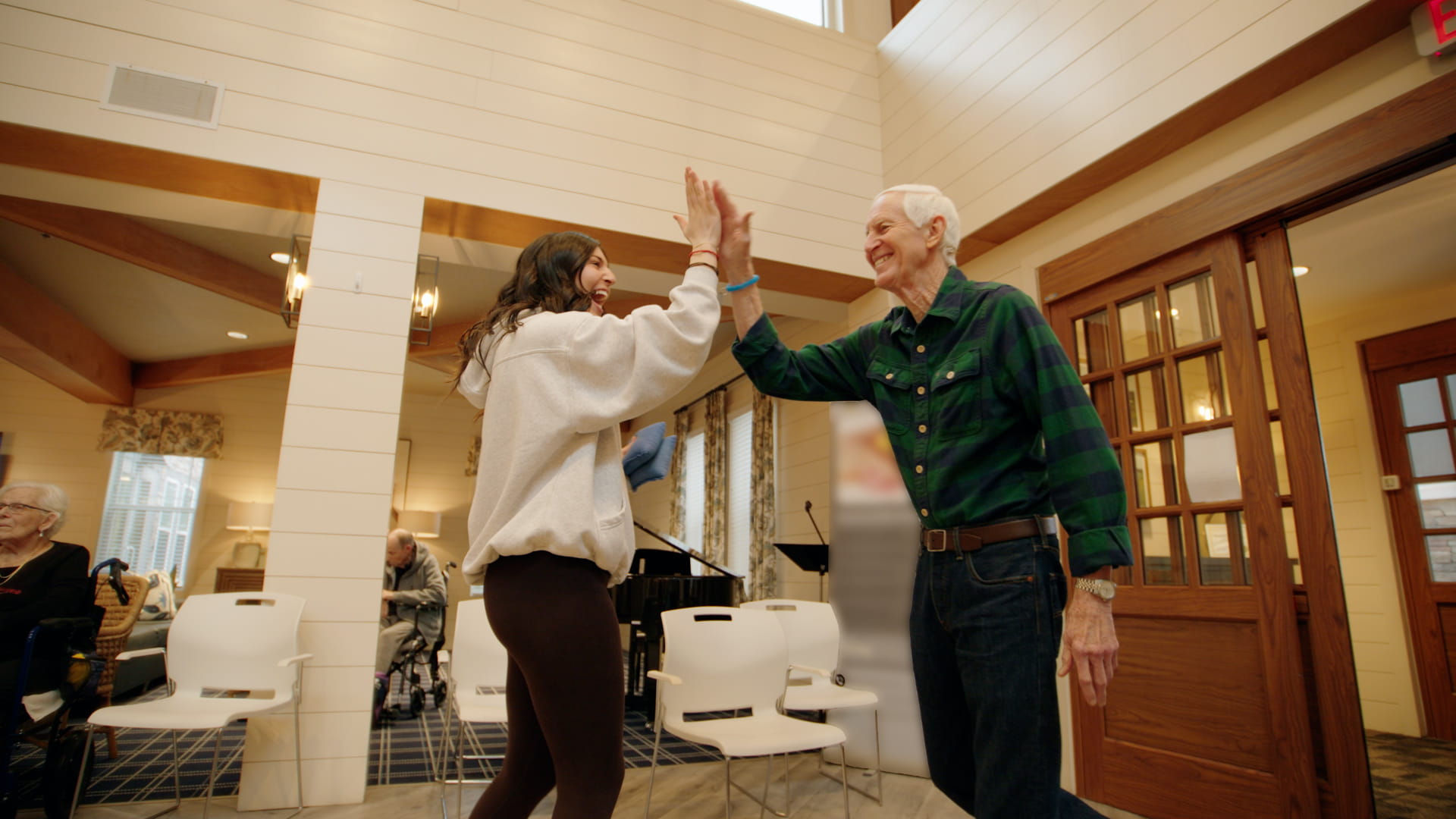
The organisation also creates opportunities for intergenerational connection, bringing people of different ages together through shared, purposeful activities. Research suggests that intergenerational engagement can support positive health outcomes across age groups.
Through intergenerational activities, Marinko argues that residents’ quality of life can be enhanced, while also delivering benefits for children. Such engagement can support social interaction, cognitive stimulation and wellbeing among older adults, while helping younger participants build confidence and challenge age-based stereotypes. Art, storytelling and hands-on activities that bring different generations together around a shared creative process can encourage connection, and promote mutual understanding.
However, children may initially feel intimidated by older adults, often due to limited experience interacting with elderly people. “But that quickly dissipates, because seniors have time. They listen, they’re patient and they let the kids talk and explore in their own time.”
“I learned pretty young that, if you pour into others, life has a full-circle way of coming back to you. That’s what was instilled in my family,” says Marinko. This set of values is represented through a handcrafted canoe which appears in numerous Phoenix Senior Living communities.
Before the company was established, Marinko watched his own family navigate life’s challenges. His father-in-law, Ray, had experienced a period of upheaval in life, which included multiple personal setbacks. When Marinko and his wife announced they were expecting their first child, Ray began building a canoe for his future grandson.
“He spent months on it,” Marinko recalls. “He dismantled and rebuilt it several times. It gave him focus.”
Today, each handcrafted canoe may remind people that they can benefit from feeling a sense of purpose and engagement. “The canoe represents teamwork,” he says. “You cannot get anywhere unless everyone is paddling together.”
At times, that figurative canoe has been vital for the Marinko family to rally around. When Jesse’s daughter, Blakely Marinko, was diagnosed with cancer as a child, the wider Phoenix Senior Living community gathered around the family. Blakely is now cancer-free, and each year the communities celebrate Blakely Day – commemorating the moment she rang the bell to signal she was in remission.
“They do all the stuff I love, and Christmas is my favourite time of year,” says Blakely. “They play Christmas music, we watch Christmas movies, and they put on all my favourite snacks.”
Blakely grew up embedded in Phoenix Senior Living’s communities. “If you have time, spend it with people who don’t have much family around them. You can learn a lot,” she says. She also shares a close bond with her grandmother, whom she calls Mimi. Together they enjoy painting, making bracelets and sharing stories and she describes their relationship as “best friends”. Marinko believes that his daughter’s dynamic with her grandmother and the joy it brings both of them is what residents at the communities benefit from. “Our job,” he says, “is to make sure people know they’re wanted every single day.”
“They always tell me not to give up when things get tough,” Blakely says. “It makes things feel less scary.”
Enabling these connections and building this community, comes down to the staff facilitating this level of care, says Marinko.
“The staff in this industry are incredible. When there’s a winter storm, they leave their own homes to come into the community to make sure the residents are safe,” he recalls. “Some of the strongest relationships I’ve seen are between caretakers and residents.”
Phoenix Senior Living staff work together in an effort to deliver a level of care that is tailored to each residents’ needs. The Legacy Project was an initiative focused on understanding who residents were before entering care, particularly those living with dementia.
By researching residents’ former professions, interests and identities, staff created visual and environmental prompts that reconnected people with their long-term memories. “A lot of who these people are is still in there,” Marinko says. “I saw people who hadn’t shown much emotion suddenly smiling, excited and happy,” he says.
In some cases, he says families were seeing expressions and reactions they hadn’t seen for many years. What’s more, the project also helped influence how care is delivered day to day. “It helped us understand what engages each person,” explains Marinko. “Once you know who someone was, you can start to understand how to reach them in a new way.”
For Marinko, intergenerational connection is more than a mere novelty. It is practical, embedded in everyday interactions and shaped by intention. Phoenix Senior Living is hoping to reimagine how they can continue to bring this into their communities and what these facilities should and could look like.
“This is not a place where life ends,” he says. “It’s another chapter.” Phoenix Senior Living works to maximise opportunities for seniors to engage with others, partake in a variety of social activities, find the appropriate healthcare and connect with the younger generation. It strives to care for its residents while aiming to empower them too.