 Watch here
 Global Coalition On

Explaining Aging Through Geroscience
Living healthier for longer
Can you live a healthier life into your 90s? Scientists are studying ageing at every scale from the inside out. What they’ve discovered is reshaping how we can live better, for longer.
Steven Austad didn’t start out as a scientist. For three-and-a-half years, he trained lions for the movie business. “Being a lion trainer is not a good way to live longer,” he jokes, reflecting on his unusual start in research. His interest in animals led him back to school to study animal behaviour more rigorously. That decision took him to Venezuela, where he discovered something that changed the course of his career. The opossums there, like those in the US, aged about as quickly as a mouse.
“They’re similar to a house cat in their body size, so why don’t they live 15 or 20 years and stay healthy for a dozen years, like cats?” Austad says. “It was such a shocking discovery that it piqued my interest and has kept me in the field of geroscience for more than 30 years.”
Today, Austad is a professor of biology at the University of Alabama at Birmingham and scientific director of the American Federation for Aging Research (AFAR). His work has revealed something profound: how our bodies age isn’t fixed.
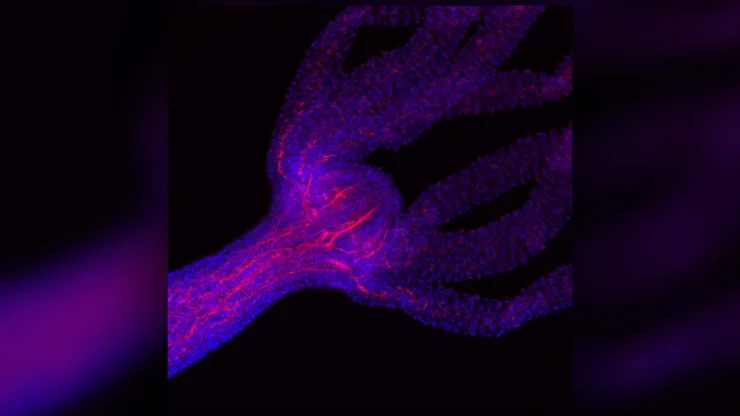
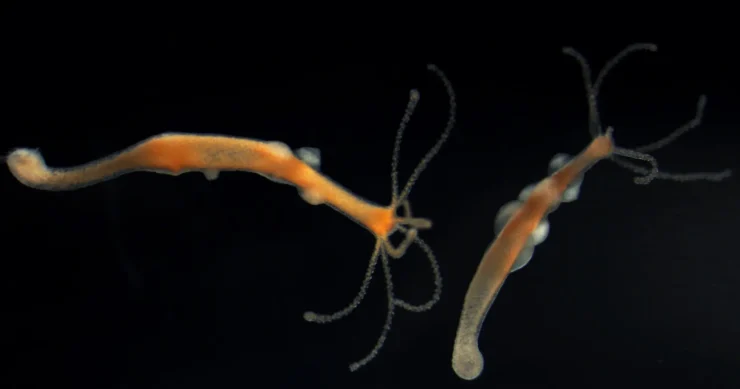
In nature, many species of plant and animal seem to defy the rules of ageing. Naked mole rats live up to 37 years, more than 10 times longer than similar-sized mice. Certain tortoises show almost no signs of biological decline even after a century. Some plant species show “negligible” signs of ageing, and the freshwater hydra (a close relative of jellyfish) seems to be able to regenerate endlessly.
Illustrative interpretation of the freshwater hydra regeneration process

What animal longevity can reveal about human ageing
For decades, AFAR-supported researchers have been studying animal longevity to better understand human ageing. These findings have built a foundation of knowledge about the biological processes of ageing, how that biology drives the onset of major diseases and how it might be targeted to extend health.
“Ageing is at the base of pretty much everything that kills us and degrades the quality of our life,” Austad says. “If we can medically target those ageing processes rather than focusing on specific diseases, there’s a chance that we can delay all of these things as a group.” Austad points to how few people are diagnosed with Alzheimer’s disease before the age of 65, and young people typically don’t get heart disease or cancer. In other words, he feels these are diseases of biological decline.
Harnessing ageing from the inside out
The biology that drives age-related diseases can be targeted, slowed and in some cases, partially reversed. The interventions that make this possible are moving from the lab into clinical reality. For nearly half a century, AFAR has invested more than $225 million supporting more than 4,500 scientists across the globe. The organisation has built a global network dedicated to the goal of extending the years spent in good health.
Scientists understand ageing through what they call the hallmarks of ageing, which are cellular and molecular changes that drive age related diseases. These include genome instability, the shortening of telomeres (protective caps on chromosomes), stem cell exhaustion and cellular senescence.
As Nathan LeBrasseur, an AFAR-funded researcher puts it, “Once our cells experience different forms of wear and tear and damage, there’s so much damage, those cells die. Senescence, or zombie cells, as some people refer to them, is this state when cells have undergone damage and dysfunction. They look different and start to impact the health and functioning of the cells around them.”
These zombie cells accumulate as we age, damaging healthy tissue around them. But they can be targeted.
“Our bodies aren’t developed to sustain all their cells and tissues for 10 decades,” AFAR president Thomas Rando says. “We suffer the consequences of living much longer than our bodies are designed to protect us for.”
The ever-growing field of geroscience is hoping to change that. By targeting the cellular and molecular biology of ageing itself, researchers are working to ensure that longer lives can also be healthier ones.
The next wave of ageing interventions
“We’ve shown quite convincingly that exercise is one way to combat senescence,” LeBrasseur says. “We’re starting to explore different pharmacological approaches to target those cells and to help clear them.
AFAR-supported researchers are beginning to explore a new class of treatments known as gerotherapeutics. Rather than targeting a single disease, these therapies aim to intervene in the biological processes that drive ageing itself.
Some of the most closely studied candidates are drugs already used for other conditions that appear to influence ageing pathways in animal models. Others are entirely new compounds designed to act on cellular mechanisms linked to ageing, such as inflammation, metabolic regulation and the accumulation of damaged cells.
If these approaches prove effective in humans, scientists believe they could delay the onset of multiple age-related diseases at once by addressing the underlying biology that connects them.
The drugs already showing promise include medications that have been shown to extend healthspan in animals. GLP 1 agonists, originally developed for diabetes and now widely used for weight loss, are showing effects beyond blood sugar control. Emerging evidence points to anti inflammation, cardiovascular benefits and potential influence on ageing pathways directly. SGLT 2 inhibitors, another class of diabetes medication, appear to prevent heart disease and kidney disease in people who don’t have diabetes.
The Dog Aging Project, a large-scale study led by AFAR grantees, is investigating whether compounds such as rapamycin can improve healthspan in companion dogs, offering insights that may help inform future human trials. Sara Espinoza, director of the Cedars-Sinai Centre for Translational Geroscience and an AFAR board member, says geroscience has proven in preclinical models that ageing pathways are modifiable. “In the last 10 to 15 years, we’ve taken really big strides in trying to translate this work to humans,” she says.
But taking that work further will depend on having better tools to measure it. In 2022, AFAR paved the way for formalising biomarkers in ageing by launching and leading the FAST (Finding Aging biomarkers by Searching existing Trials) initiative, now supported and advanced by the ARPA-H PROSPR program of the US government. Such tools could be essential for advancing future clinical trials and helping individuals know whether interventions are working.
DEFINITION OF BIOMARKERS
Biomarkers are indicators of a biological state or condition that can be measured in a patient’s body. A blood pressure reading, for example, is one example of a biomarker for high blood pressure. They can also be found in blood, urine, tissue, cerebrospinal fluid (CSF), or other biological material.
In ageing research, biomarkers can indicate how the body is ageing and whether an intervention is having an effect. Unlike many disease areas, ageing research has lacked widely accepted, validated biomarker endpoints, forcing researchers to rely on slow clinical outcomes that can take years to observe.
By finding easily detectable biomarkers for ageing, researchers can better understand and measure ageing.
Austad, for his part, is optimistic that this research will move from the labs into our lives soon. “In five years, we’ll probably have some therapies we can say are going to be beneficial for prolonging health and life,” he says.
Austad cautions that there is no one-size fits all solution, nor will there be a “magic pill”. The future he considers the most likely – and most promising – lies in combination therapy.
“I’d like to see a combination of low-cost, effective drugs working together with lifestyle changes,” Austad says. “It could be that nutrition and exercise, in combination with these drugs, may work together synergistically. If we could slow down ageing even by half as much as we’ve been able to do in animals, we’re looking at a 10- to 20-year increase in human life expectancy, which would change almost everything we could imagine.”
Precision medicine may soon help determine which interventions work best for each person. “We know that genetic predisposition is a major factor in how we age and our risk for disease,” Espinoza says. “We’re getting closer to this, but we still need to work out how to fit this into medical care.”
“In five years, we’ll probably have some therapies we can say are going to be beneficial for prolonging health and life” — Steven Austad Supporting scientists, advancing healthy lives – Steven Austad
None of this research happens in isolation, which is why some feel it’s crucial to build the capacity of those who conduct it.
LeBrasseur received one of AFAR’s early-career grants. “AFAR had a grant for post-doctoral researchers that provided me a little bit of money to do some exciting work,” he says. “AFAR has really been this gathering ground to bring us together, advance the science. And for me, it really opened the door to this space.”
That small grant launched a career now contributing to how we understand and target the biology of ageing. It’s a pattern repeated across AFAR’s grantees, from early support that creates a multiplier effect, building a global network of researchers dedicated to solving the challenge of healthy ageing
“We want to create a bigger cadre of bright young scientists to make advances in understanding geroscience and developing new therapies to keep us young and healthy longer,” Austad says.
“Right now, it’s an extremely collaborative field,” Austad says, highlighting the central role of mentoring and convening researchers in AFAR’s approach. “The world is ageing more quickly than it ever has done in the 300,000-year history of our species. Are they going to be healthy people that are still contributing and living lives of fulfilment and enrichment, or are we looking at more frail, disabled people that require some sort of care?”
The answer depends on the work being done now. AFAR’s investment has helped towards a global network of researchers, dedicated to ensuring those added years are healthy, active and fulfilling. The biology that once seemed fixed is now understood to be modifiable, and the distance between discovery and clinical application is shrinking.
In just the past 10 to 15 years, scientists have moved from understanding the hallmarks of ageing in the lab to the beginning of human trials. Drugs that extend lifespan in animals are being tested in people. Interventions that seemed distant are moving closer to clinical reality.
“To the extent that we’re successful at intervening in the ageing processes, we would reimagine the whole trajectory of human life,” Austad says. “If we had a good chance of an extra 20 years of life, I think it changes everything.”
The mission of the American Federation for Aging Research (AFAR) is to support and advance healthy ageing through biomedical research.
Discover more from AFAR