 Watch here
 Global Coalition On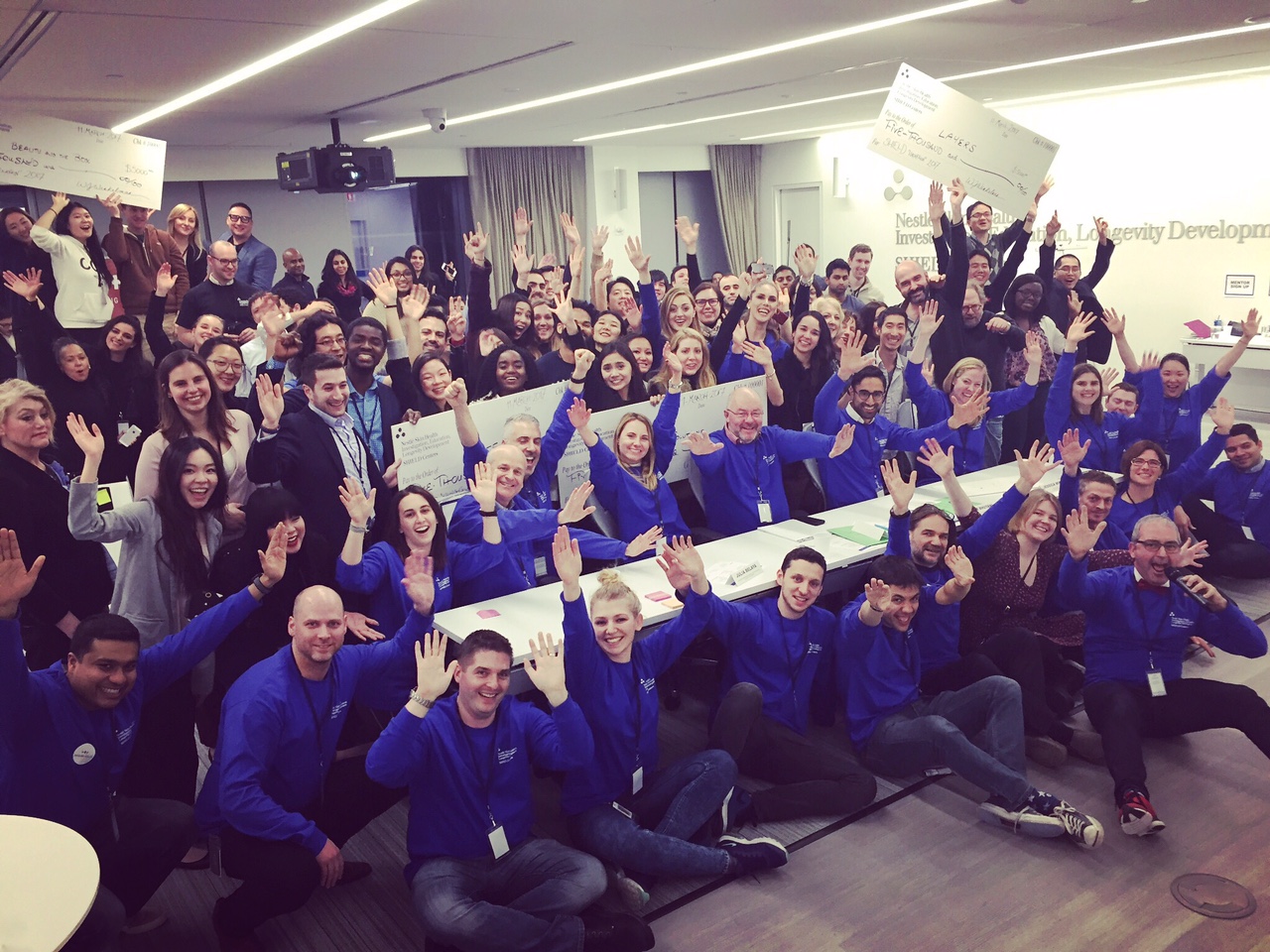
Hackathon judges award $20,000 in prizes, with a grand prize still up for grabs.
NEW YORK (March 29, 2017) – Four innovation teams took top prizes at the inaugural Nestlé Skin Health SHIELD Hackathon on March 10th and 11th, 2017. Judges awarded $5,000 to each winning team for their innovative proposals to address challenges in skin health. Next month, the teams are invited to give an extended pitch for the grand prize of $20,000 and a yearlong collaboration residency at the Nestlé Skin Health SHIELD flagship site at the Alexandria Center for Life Sciences in New York City.
The four hackathon winners include:
- Acne care based on microbiome analysis
- A game to engage children and teens in skin wellness and hydration
- A three-in-one skin care regimen delivery system targeting Baby Boomer women
- A personalized DIY skin care regimen system for today’s eco-conscious consumers
“The Hackathon is the culmination of a six-month digital skin health innovation series that our SHIELD community developed in partnership with the Global Coalition on Aging and Hacking Health New York,” explained Dr. Warren Winkelman, Senior Medical Director and Head of Medical Innovation at SHIELD. “Events like this represent what SHIELD is about: multi-disciplinary and multi-generational collaboration to advance skin wellness through innovation, both low tech and high tech.”
At the hackathon, 22 teams of 77 participants gathered at the Nestlé Skin Health SHIELD Center in New York City for two days, digging into the biggest challenges in skin health, designing solutions, and turning these ideas into competitive business proposals.
“This series has engaged members of the New York digital health community of all ages and all backgrounds on the growing importance of skin health throughout our increasingly long lives. Before they walked in the door at SHIELD, most of the participants had not given much thought to skin health. They walked out on Saturday night inspired to keep dreaming up new ways to empower skin wellness in our age of longevity,” said Melissa Mitchell, Executive Director of the Global Coalition on Aging, who served as a mentor to the teams.
“SHIELD clearly, like us, is part of this movement of people passionate about bringing innovation to healthcare,” said Luc Sirois, Founder of Hacking Health.
SHIELD charged the participants to develop innovative solutions in four challenge areas: Skin Health Literacy, Nutrition and Skin Health, Engaging Acne, and Skin Health Technology for the Aging Population. As the participants developed their business proposals and prepared their 5-minute pitches, they were guided along the way by mentors from within Nestlé Skin Health and from across the SHIELD network who generously shared their expertise. “I was honored to be able to coach these future entrepreneurs to help them prepare their pitches,” said Yvan Deurbroeck, Global VP of Communications for Nestlé Skin Health. “Seeing so much creativity at SHIELD and so many minds set to the task of advancing skin wellness was both inspiring and humbling.”
“We loved participating in the hackathon,” said Tammy Sachs, a member of the winning team in the Technology for the Aging track. “The mentors were incredibly helpful, and everyone was so supportive. We look forward to the next challenge.”
In addition to awarding the four checks, the panel judges – Julia Belaya of Plug and Play Innovation Center, Gurdane Bhutania, cofounder of venture capital firm FundRx; SHIELD Managing Director Didier Leclercq; Nestlé Skin Health Patent Counsel Jessica Mikus; and Jeff Powers, Galderma’s IT Director for Marketing and Commercial Operations – chose to bestow an Honorable Mention and invitation to return to a fifth team for its work developing an open source digital solution to empower developing countries across the globe to better address the burden of skin disease, its complications, and its impact on the health of their at-risk populations.
“We are excited about all of the truly incredible ideas created here at SHIELD this weekend,” said Mr. Leclercq. “And we can’t wait until next month when we will select one of these very talented teams to work with us over the coming year to turn their inspiration into reality.”
About Nestlé Skin Health SHIELD
Nestlé Skin Health SHIELD is a global network of innovation and education hubs gathering today’s most creative and visionary thinkers from diverse disciplines to generate, develop, and incubate ideas to advance skin health for tomorrow. SHIELD explores creative partnerships, new concepts, and technologies to help preserve lifelong skin health; mitigate the emergence of skin conditions; and integrate the skin dimension into the public consciousness, discourses on policy, and the organization of age-friendly spaces. More information at www.nestleskinhealth.com/shield
About the Global Coalition on Aging
GCOA is the world’s leading business voice on aging policy and strategy. GCOA advances policy and market solutions to ensure aging is a path for economic growth, winning business strategies, and social well-being.
About Hacking Health
Hacking Health aims to transform healthcare by connecting healthcare professionals with designers, developers, innovators, and entrepreneurs to build realistic, human-centric solutions to front-line healthcare problems.